
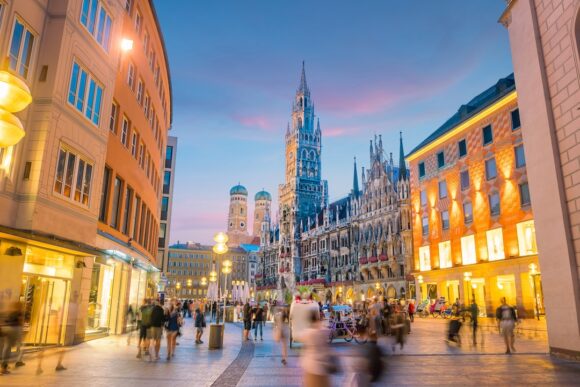
Munich has a reputation that often starts and ends with beer halls and Oktoberfest. But spend even half a day walking through the city center and you quickly realize there’s far more to it: royal history, grand architecture, hidden courtyards, local eateries, and places that feel distinctly Bavarian without being overly polished for tourists.
This route is designed for around four to five hours on foot and works well whether it’s your first visit or your tenth. Distances are short, but there’s enough variety to make central Munich feel bigger than it first appears.
1. Start at Marienplatz and Catch the Glockenspiel
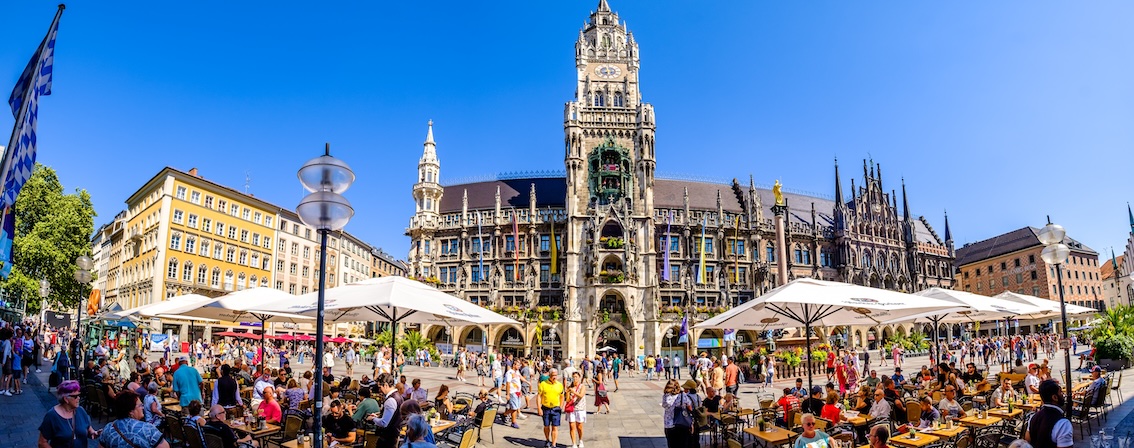
Every first-time Munich itinerary should begin at Marienplatz, and for good reason. The square blends different eras of Munich – from its medieval origins to nineteenth-century grandeur and modern city life. It has been Munich’s central square since 1158 and remains the city’s natural gathering point. The square is dominated by the Neo-Gothic Neues Rathaus (New Town Hall), which possesses an ornate façade that often surprises visitors expecting something more traditionally Bavarian.
 Shutterstock
 If possible, arrive shortly before 11 a.m. or noon (and 5 p.m. in summer) to see the famous Glockenspiel performance. Mechanical figures emerge high above the square to reenact
If you want a quick coffee before continuing, the surrounding streets offer plenty of options without leaving the historic core.
2. Walk Through the Frauenkirche
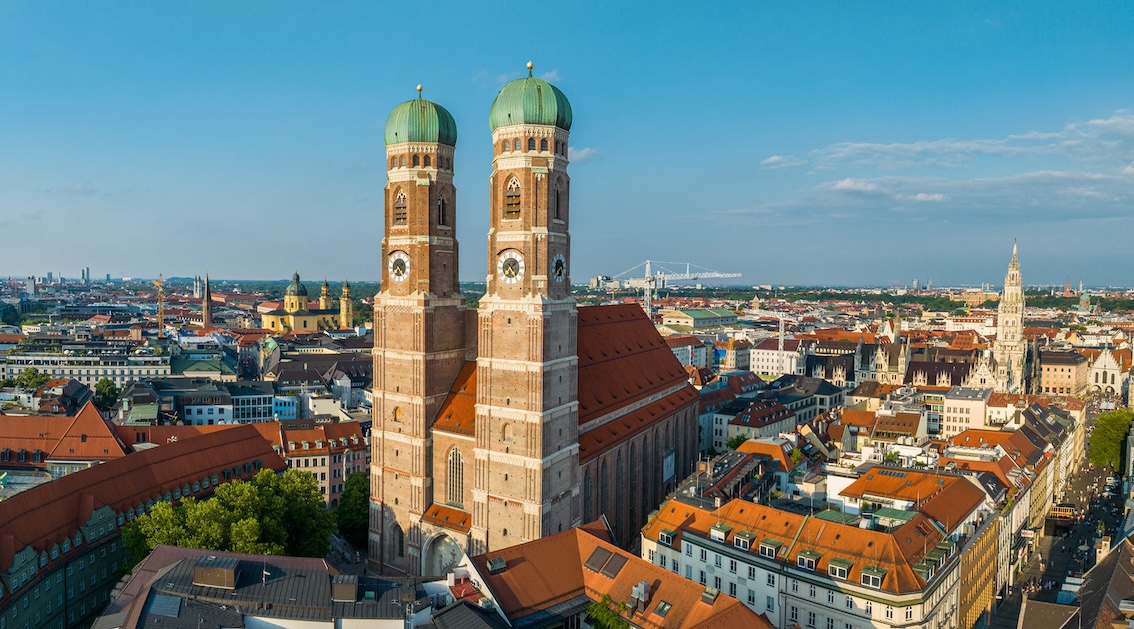
From Marienplatz, it’s less than five minutes to Munich’s most recognisable landmark. The Frauenkirche’s twin green-domed towers define Munich’s skyline and remain visible from much of the center. Unlike many European cathedrals, its exterior is relatively restrained: large brick walls and clean lines rather than elaborate decoration.
 Engel Drohnenpilot / Shutterstock.com
 Inside, the scale becomes more apparent. It’s cavernous, lovely, and filled with amazing detail. One of the church’s most curious details is the so-called “Devil’s Footstep,” a dark footprint embedded in the floor. According to local legend,, the devil was tricked into believing the church had no windows, until stepping inside and seeing the light.
Even visitors who aren’t especially interested in churches often find this stop worthwhile because of the atmosphere and historical significance.
3. Explore the Residenz and Its Courtyards
Continue east toward the Munich Residenz, which is one of the highlights that many Munich day-trippers miss.The Residenz gives a different perspective on Munich: less beer-hall capital, more European royal city. For centuries this was the seat of Bavarian rulers, and today it’s one of Europe’s largest city palaces.
 Mirko Kuzmanovic / Shutterstock.com
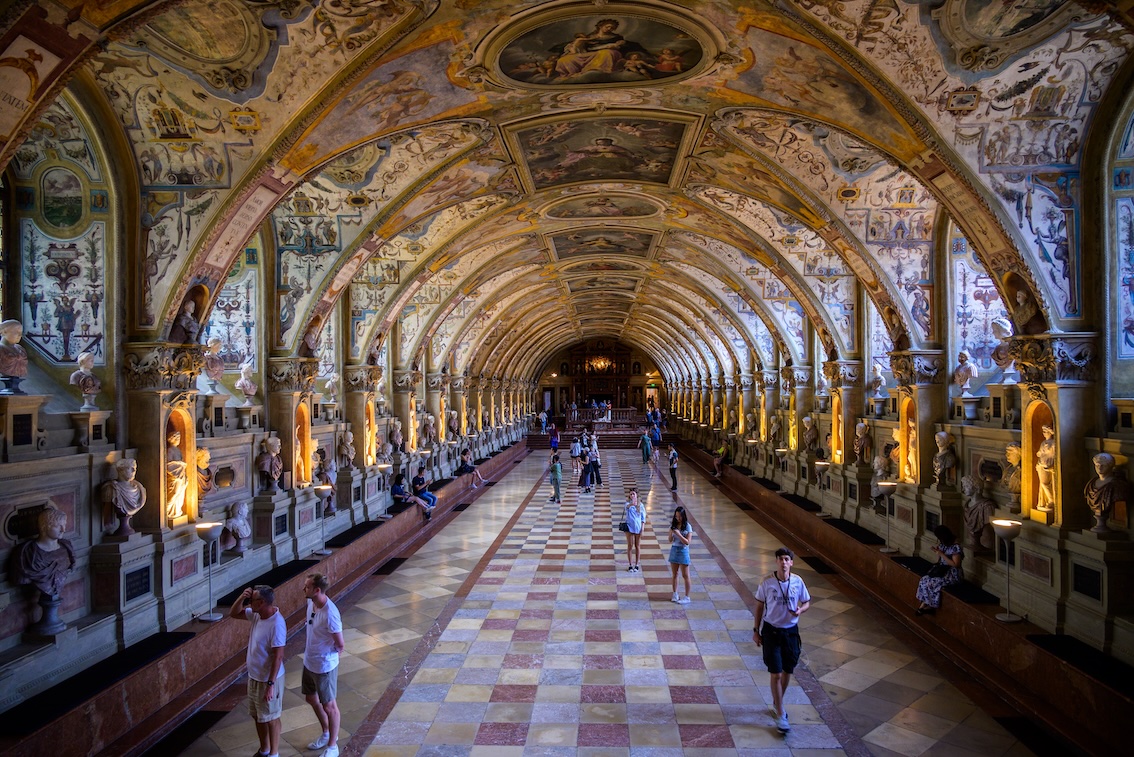
 Hall of Antiquities Antiquarium in Residenz Museum.
You could spend an entire day inside, but for a half-day walking tour, focus on the exterior courtyards and choose one interior highlight if time permits.
Walk through the sequence of courtyards and arcades and notice how architectural styles shift across centuries. If you go inside, the Antiquarium (the enormous Renaissance hall originally designed for sculptures) is particularly memorable.
4. Slow Down at Odeonsplatz and the Hofgarten
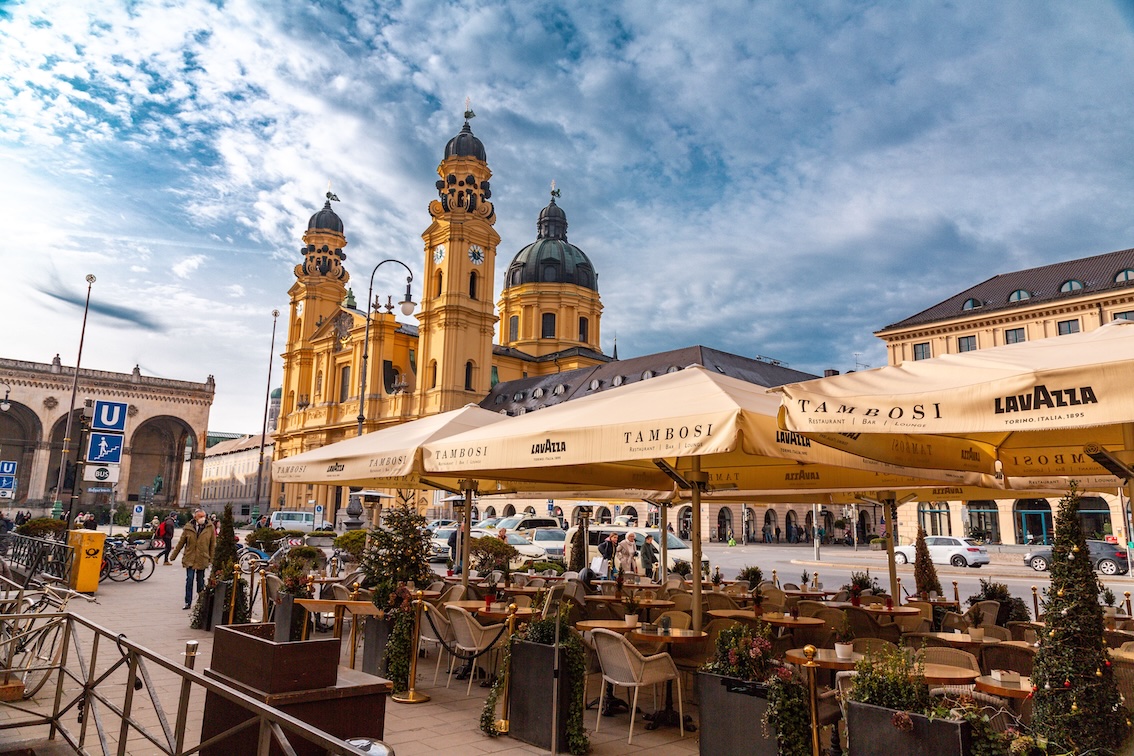
Exit the Residenz toward Odeonsplatz. This broad square feels distinctly different from Marienplatz: calmer, more open, and often less crowded despite being only a few minutes away.
 Mirko Kuzmanovic / Shutterstock.com
 Look for the yellow façade of the Theatinerkirche and the open loggia structure inspired by Florence. From here, step directly into the Hofgarten.The garden’s geometric paths, fountains, and central pavilion create one of the easiest places to pause during the walk. Locals cut through here constantly, and that everyday use gives the space a different feel from more formal palace gardens elsewhere in Europe.
If the weather is good, this is an ideal place for a short break.
5. Finish at Viktualienmarkt
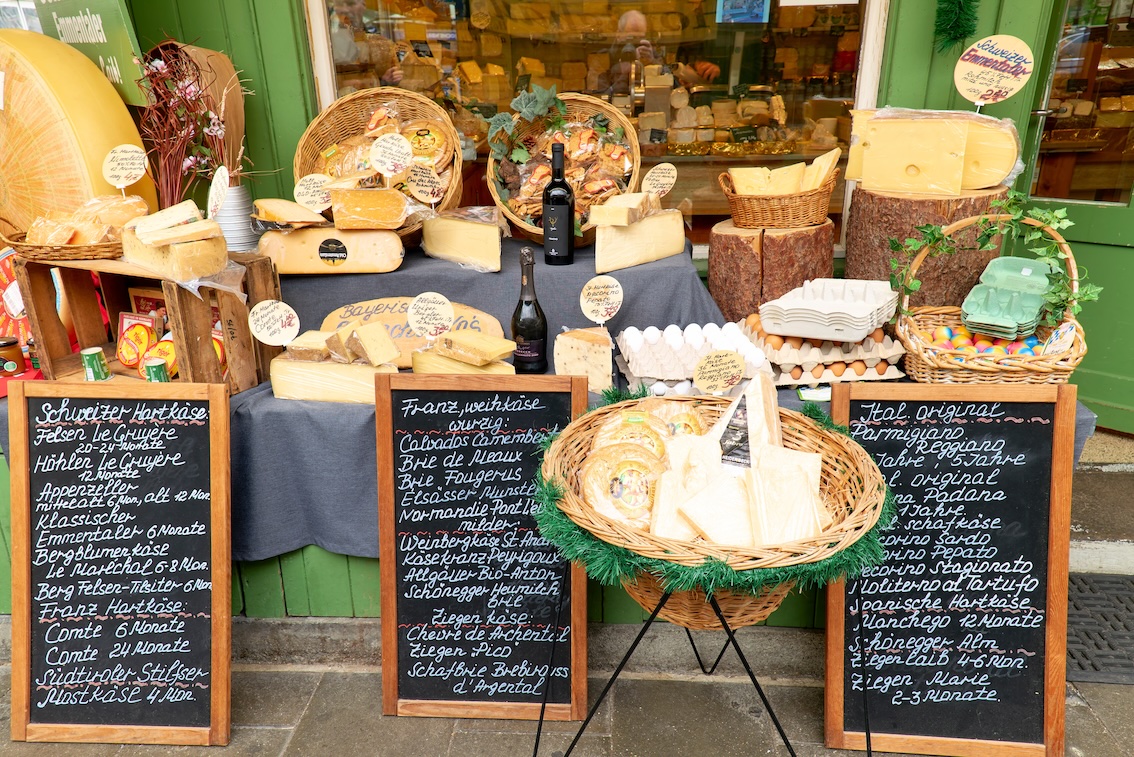
Loop back south for a final stop at Viktualienmarkt. This open-air market has operated in central Munich for more than 200 years and remains one of the city’s most enjoyable places to wander. It’s also a reminder of how regional food culture changes from one part of the country to another.
Unlike markets built mainly for tourists, Viktualienmarkt still functions as a genuine food market. Expect seasonal produce, cheeses, flowers, Bavarian specialities, and plenty of opportunities to pick up lunch.
 marcobriviophotographer / Shutterstock.com
 If you want something distinctly local, try a fresh pretzel, Obatzda (a Bavarian cheese spread), or a simple sausage lunch with a drink in the beer garden area.
It’s an easy, low-pressure ending to the walk, and one that feels more like experiencing Munich than checking landmarks off a list.
Timing Tips
For the best experience, start between 09:00 and 10:00. You’ll reach Marienplatz before peak crowds and still have time to finish with lunch at Viktualienmarkt.
Spring and early autumn are particularly good for walking conditions, while December adds Christmas market atmosphere. Summer offers long daylight hours but also the largest crowds.
Getting to Munich
By car, Munich is approximately 4.5 hours from Kaiserslautern, 4 hours from Wiesbaden, and 2.5 hours from Stuttgart. For rail options, check with Deutsche Bahn.
Featured image by f11photo / Shutterstock.com