by Bret Helenius, contributing writer
The Camino de Santiago, or Way of St. James, is a vast network of ancient pilgrimage routes converging at the shrine of St. James in Santiago de Compostela, Spain. While many associate the journey with Spain alone, the experience often begins much further east. Routes like the Jakobsweg in Germany have guided pilgrims across Europe for centuries, forming the early stages of what becomes a deeply personal and transformative journey.
 Jokue-photography / Shutterstock.com
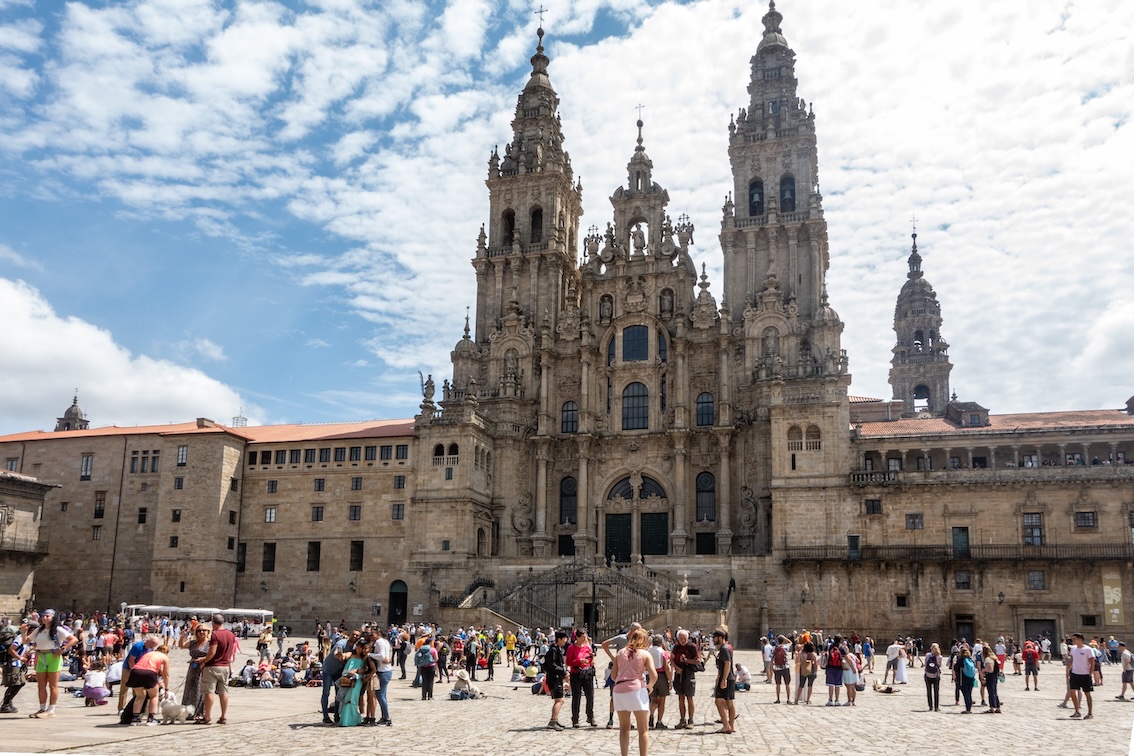
 Pilgrims and tourists explore the bustling square in front of the magnificent Cathedral of Santiago de Compostela under a partly cloudy sky.
The Connection: Jakobsweg and the Camino
The Jakobsweg (literally “Jacob’s Way”) represents Germany’s contribution to this extensive pilgrimage network. Its trails weave across the country, connecting pilgrims from Northern and Eastern Europe to the major routes that pass through France and ultimately into Spain.
Many of these paths merge into the Camino Francés via historic French routes such as the Via Podiensis, Via Turonensis, Via Lemovicensis, and Via Tolosana. From St. Jean Pied-de-Port, pilgrims cross the Pyrenees and continue roughly 780 kilometers to Santiago de Compostela.
Depending on where you begin in Germany, the total journey can exceed 2,500 to 3,000 kilometers, a commitment that often takes months to complete.
A Journey Through History
The Camino’s origins date back to the early 9th century, when pilgrims visited the relics of St. James. By the 11th and 12th centuries, the pilgrimage had become one of the most important in Christendom, rivaling Rome and Jerusalem.
Over time, routes were formalized, infrastructure developed, and guides like the Codex Calixtinus helped pilgrims navigate the journey. Though interest declined after the Reformation, the Camino has experienced a powerful revival in recent decades, attracting people from all walks of life.
Official Pilgrimage Rules and the Credencial
For those wishing to complete the Camino in an official sense, the journey is tied to earning the Compostela, a certificate awarded in Santiago de Compostela. To qualify, pilgrims must walk at least the final 100 kilometers (or cycle 200 kilometers) into the city, demonstrating that they have completed a meaningful portion of the route.
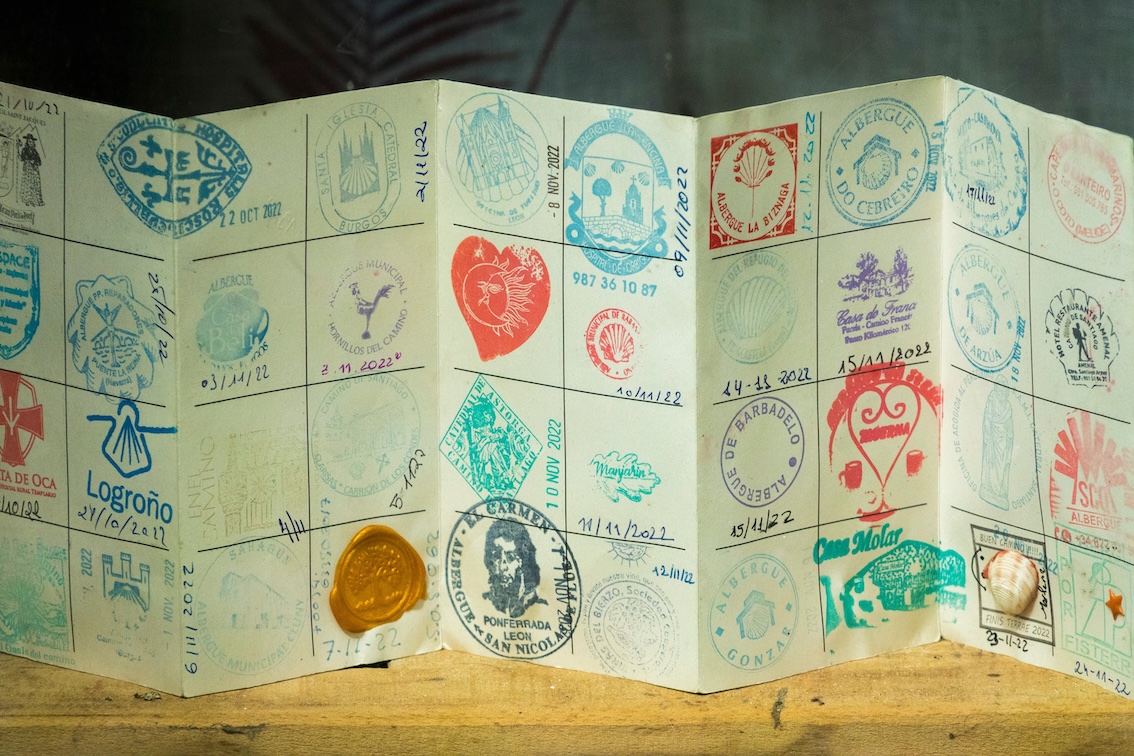
Central to this process is the Credencial, or pilgrim passport. This small booklet serves as both identification and a record of your journey. Along the route, pilgrims collect stamps, which are known as sellos, at least twice daily during the final stretch to prove their progress.
 Joan Sutter / Shutterstock.com
 The credencial: The pilgrim’s passport on the Way of Santiago de Compostela. Camino de Santiago pilgrimage.
Obtaining a Credencial is relatively straightforward. Many pilgrims acquire one before starting their journey through official Camino associations in their home country, local pilgrimage societies, or even certain churches. They are also widely available at major starting points along the route, including pilgrim hostels (albergues), tourist offices, and cathedrals. For those starting in popular locations like St. Jean Pied-de-Port or Porto, obtaining one on arrival is typically quick and easy.
Practicalities of the Journey
While the Camino carries a strong sense of tradition and simplicity, the modern experience is supported by a well-developed infrastructure that makes the journey accessible.
Accommodation is primarily found in albergues, which range from basic dormitory-style lodgings to more comfortable private options. These are specifically designed for pilgrims and are widely available along most major routes. Unlike in centuries past, it is not common practice to seek lodging from private homes, as the network of hostels provides reliable and affordable alternatives.
Planning your daily stages is an important part of the experience. Most pilgrims walk between 20 and 30 kilometers per day, depending on fitness, terrain, and weather. While it’s possible to plan extensively in advance, many choose a more flexible approach and decide each day’s destination based on how they feel.
Food and supplies are generally easy to find, especially on popular routes like the Camino Francés, where villages appear regularly. Pilgrim menus, offering simple and affordable multi-course meals, are a staple along the way.
Terrain and Routes
One of the most compelling aspects of the Camino is the way the terrain shifts dramatically across regions, offering a constantly changing backdrop that keeps the journey engaging.
 bepsy Shutterstock
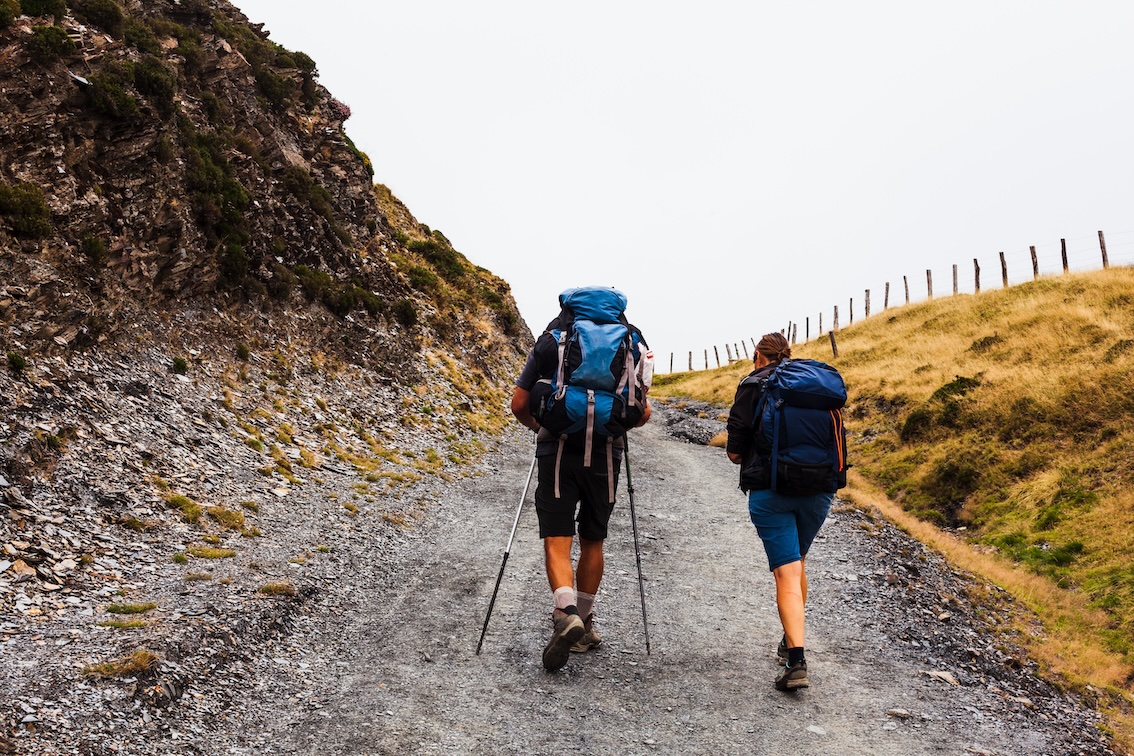
 Pilgrims walking in the mountains of the Pyrenees, on the border between France and Spain. Path from Saint Jean Pied de Port to Roncesvalles. Pilgrimage of Compostela, Camino de Santiago.
Crossing the Pyrenees at the start of the Camino Francés is both difficult and rewarding, with steep climbs and breathtaking mountain views that immediately immerse you in the experience. Further along, the Meseta presents a stark contrast: vast, open plains where the horizon stretches endlessly, inviting quiet reflection and mental endurance.
Meanwhile, routes like the Camino del Norte offer dramatic coastal scenery, with rugged cliffs, ocean views, and the rhythmic sound of waves accompanying your steps.
Each of the major routes – whether it’s the popular Camino Francés, the scenic Camino Portugués, the wild Camino del Norte, or the more rugged Camino Primitivo – offers a distinct experience. Whether you’re seeking solitude, cultural immersion, or physical challenge, there is a path that meets you where you are.
Essential Gear
Before setting out, it’s important to understand that the Camino is not a casual stroll. It is a physically demanding, multi-day (or multi-week) journey that requires serious preparation.
Recommended Gear:
- Footwear: Broken-in trail running shoes or light hiking boots
- Clothing: Lightweight, moisture-wicking layers and a waterproof jacket
- Walking sticks: Helpful for balance and reducing strain on knees
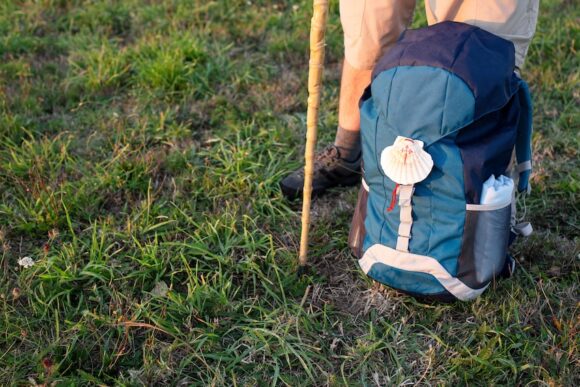
- Backpack: 30–40 liters, ideally no more than 10% of your body weight
- Essentials: First-aid kit (especially blister care), headlamp, water system, sun protection, and quick-dry towel
Best Time for the Pilgrimage
Timing can significantly shape the experience. Spring (April to May) is a popular choice, offering mild temperatures and blooming landscapes, though rain is fairly common. Summer (June to August) brings long, sunny days and fully open services, but also larger crowds and intense heat. Autumn (September to October) is often considered one of the best times to walk, with comfortable weather, fewer pilgrims, and a rich seasonal atmosphere, though some accommodations begin to close toward the end of October. Winter presents real challenges, including cold temperatures, snow in mountainous areas, and limited services along the route.
Featured image by Formatoriginal / Shutterstock.com